Aerospace / mechanical engineering

Aerospace hardware, space systems, and the research behind them.

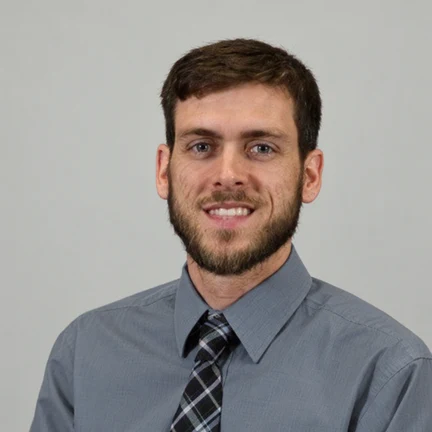
Alex Blythe works across propulsion hardware, thermal and fluid analysis, test, verification, technical software, and independent research.

01 — OverviewSelected work, research, and writing
01Design & analysisThermal, fluid, structural
02Test & verificationInstrumentation, readiness, evidence
03Research & writingIndependent technical work

02 — Engineering

Propulsion, thermal analysis, and test across the engineering lifecycle.

Alex’s work spans mechanical and structural analysis, propulsion hardware, aeroheating and thermal-load modeling, CFD, instrumentation, test readiness, configuration control, and technical tool development.

01

Sep 2025 – Present

Nozzle Mechanical Design Engineer

Aerojet Rocketdyne / L3Harris

Mechanical and structural analysis, design investigations, test readiness, configuration control, and cross-functional propulsion hardware work.

Propulsion hardware
02

Jun 2025 – Sep 2025

Propulsion Test Engineer — Surge Support

KTEngineering

Liquid rotating detonation engine wet-dress and hot-fire campaign support, instrumentation, telemetry monitoring, and anomaly triage.

Propulsion test
03

May 2024 – Jun 2025

Senior Thermal Engineer / Tool Developer

Russell Technical Consulting Services

Aeroheating and thermal-load modeling, team leadership, CFD meshing, and development of a retrieval-assisted aerospace research tool.

Thermal / CFD

03 — Research

Independent aerospace research with technical notes alongside it.

Aerospace research anchors this work, from theoretical propulsion and launch environments to CFD and analytical methods. Notes on AI systems remain a separate technical stream.

Independent paperSpace propulsion

Bifrost Drive

A theoretical propulsion study examining whether energy collected by a Dyson swarm could power a directed laser system to accelerate a solar sail to relativistic velocities.

The work focuses on mathematical modeling and the mission implications of interstellar propulsion.

Secondary technical notes

Shorter notes on AI systems, OCR, verification, and local tooling sit alongside the primary aerospace research.

Architecture

Separating Intent, Execution, and Verification

Published7 min
Technical note

Why OCR Quality Matters to Agentic Workflows

Draft6 min
Technical note

Measuring Local AI Savings Without Lying to Yourself

Draft5 min
04Flagship research

Road to Type 2

An engineering examination of humanity’s path toward a Kardashev Type II civilization.

Road to Type 2 explores the propulsion, energy, space infrastructure, resource utilization, settlement, and industrial capabilities required to expand human civilization through the Solar System and ultimately harness energy on a stellar scale.

StatusIn development
ScopeSolar System to stellar scale
FormatManuscript + research notes
Read related research
01ThesisKardashev Type II
02SystemsPropulsion / energy
03ScopeSolar System → stellar scale

05 — Resume

Experience across analysis, test, hardware, and systems engineering.

Work spanning propulsion hardware, environmental and dynamic testing, aeroheating and thermal analysis, CFD, modeling and simulation, instrumentation, verification, and technical software.

Education

B.S., Aerospace Engineering
University of Alabama in Huntsville · 2019

A.A.S., Applied Technology
J.F. Drake State Technical College · 2015

Technical domains
Aerospace test and verificationThermal and fluid analysisCFD and technical modelingPythonMATLAB / SimulinkLabVIEW
Experience

Analysis, test, and hardware engineering
Propulsion, thermal/fluid systems, environmental testing, modeling, verification, and technical workflow design

06 — Contact

Interested in the research? Get in touch.

I welcome conversations about aerospace engineering, propulsion, space systems, and independent research.

Email Alex
.hero { padding: clamp(42px, 5vw, 72px) 0 24px !important; } .hero-grid { grid-template-columns: minmax(0, 1.25fr) minmax(300px, 0.75fr) !important; align-items: start !important; gap: clamp(48px, 7vw, 96px) !important; } .hero-copy { min-width: 0; } .hero-copy h1 { max-width: 800px; font-size: clamp(2.75rem, 5vw, 4.75rem) !important; line-height: 0.98 !important; } .hero-rail { align-self: start; margin-top: clamp(24px, 4vw, 56px) !important; } .hero-foot { margin-top: clamp(48px, 6vw, 72px) !important; } @media (max-width: 1100px) { .hero-grid { grid-template-columns: minmax(0, 1.15fr) minmax(280px, 0.85fr) !important; gap: clamp(40px, 5vw, 64px) !important; } .hero-copy h1 { font-size: clamp(2.75rem, 5.5vw, 4.25rem) !important; } } @media (max-width: 860px) { .hero-grid { grid-template-columns: 1fr !important; gap: 36px !important; } .hero-rail { max-width: 500px; margin-top: 0 !important; } .hero-copy h1 { font-size: clamp(2.75rem, 8vw, 4rem) !important; } .hero-foot { margin-top: 48px !important; } } @media (max-width: 620px) { .hero { padding: clamp(34px, 10vw, 52px) 0 20px !important; } .hero-grid { gap: 28px !important; } .hero-copy h1 { font-size: clamp(2.375rem, 12vw, 3.25rem) !important; line-height: 1 !important; } .hero-lede { margin-top: 22px !important; } .hero-actions { margin-top: 28px !important; } .hero-foot { margin-top: 40px !important; } }